

Kids need skis and bindings suited to them, properly fitting ski boots, a snow-sports helmet, goggles, and clothing that keeps them warm and dry. Young beginners can usually leave the poles behind.
They also need an adult who hasn't used up the entire day's patience getting the equipment out of the car. Unfortunately, that item isn't available at the rental counter.
Start with fit and comfort. Expensive gear won't rescue a ski day if the boots hurt, the mittens are soaked or the skis are too much for the child to manage.
“For small children, comfort is more important than high performance. Boots are the most important piece of gear, and a proper fit is essential to the whole experience. Too tight and they'll get cold feet, too loose and they won't be able to control their skis. These aren't Olympic racers, so no need to squeeze 'em into tight form-fitting boots.” — Ski Tips for Kids
Rent, buy or buy used?
For a child's first few ski days, rentals are often a practical way to begin. You can try skiing without buying equipment your child may outgrow before the next season. A rental shop can also help with fit and change something that clearly isn't working.
If your family skis regularly, consider a seasonal rental or buying. Compare the whole season's cost and the convenience of collecting equipment, rather than just the price of the skis. Seasonal programmes differ, so check what adjustments, exchanges and maintenance are included.
Used equipment can make sense when it is appropriate, compatible and serviceable. Have a ski shop inspect the boots, bindings and skis before committing. Old bindings may no longer be serviceable through a particular shop, and a boot that appears to fit still needs to work with the binding.
The bargain becomes considerably less charming if the shop can't set it up for your child.

Choose skis for the skier you have
Length matters, but a child's height alone doesn't settle it. Ability, weight, strength and the particular ski also matter. The book's belly-button, chin and nose illustrations explain a progression from shorter beginner skis toward longer skis as skills develop. Treat them as guidance for a conversation with the shop.
Don't buy long skis simply to get another year out of them. A beginner needs equipment they can move, turn and stop on now. Longer isn't a promotion.

Boots deserve most of your attention
A child's boots should hold the foot securely without causing pain. A boot that is too roomy lets movement happen inside it instead of reaching the ski. A painful boot gives your child something much more interesting to think about than turning.
Measure both feet and start from the longer foot's length in centimetres. That's the basis of Mondo sizing. Then try the boots on with one pair of the ski socks the child will actually wear.
Check the fit again once the child has stood and moved around. Ask specific questions: Is something pinching? Are the toes crowded? Is the heel moving? Can they comfortably bend their legs in the boots? Have the shop assess fit concerns rather than automatically choosing a larger size.
Our Boot Sizing & Mondo Guide goes into measurement, growing room, shell sizes and common mistakes.
Bindings aren't a do-it-yourself project
Bindings connect the boot to the ski and have release functions. A qualified technician should confirm compatibility, adjustment and operation for the child's actual boots and skier information.
If your child gets new boots, have the bindings checked again. Matching Mondo labels don't guarantee identical boot-sole lengths or compatible sole standards.
At the hill, teach the simple routine: clear snow from the soles, step in as demonstrated and check engagement. Ask the shop or instructor for help when something doesn't click in properly. Don't solve repeated releases by turning the numbered setting yourself.

Helmet and goggles
Choose a properly fitting helmet intended for skiing or snowboarding. Follow its fitting instructions, fasten the chin strap and check that goggles fit comfortably with it. A thick hat stuffed underneath can change the fit; use only headwear compatible with the helmet's instructions.
Check the goggles with the helmet on your child, rather than admiring the matching colours in the shop. They need a clear view, a comfortable seal and suitable coverage. Show your child where to put them during breaks so they aren't crushed under a boot bag.
And wear your own helmet. Children have a remarkable ability to spot the one safety rule apparently reserved for them.
Do they need poles or a teaching tool?

First-time little skiers have plenty to learn without carrying poles. Balance, moving around and controlling the skis come first. Do Kids Need Ski Poles? explains when they become useful.
A teaching tool should solve a particular problem. A tip connector can help a young beginner maintain a wedge. A harness or ski trainer may provide assistance with speed. These do different jobs, and none removes the need for suitable terrain or an adult with the skills to use it.
If you choose assistance, notice what the child is doing themselves and reduce the help as their skills develop. Compare the options in Best Tools for Teaching Kids to Ski (guide coming soon).
Warmth is equipment too
Use a moisture-managing base layer, suitable insulation and an outer layer that protects against snow and wind. Add warm handwear, ski socks and appropriate face coverage. Take spare mittens or gloves and spare socks when you can.
Start with dry boots and dry clothing. Adjust layers as the child heats up, and take breaks before cold or fatigue becomes the main event. See How to Dress Kids for Skiing for the details.
Have a bathroom visit before all the layers go on. This is less a performance tip than a preservation-of-parental-sanity tip.
Before leaving the rental counter
- Check boots with the actual ski socks, and tell the staff about discomfort.
- Confirm the shop has set up the skis and bindings for this child and these boots.
- Check helmet and goggles together.
- Ask how to step in, step out and report equipment problems.
- Keep the poles optional for a young beginner.
The goal is usable equipment and a comfortable child. Everything else can be discussed over the inevitable hot chocolate.
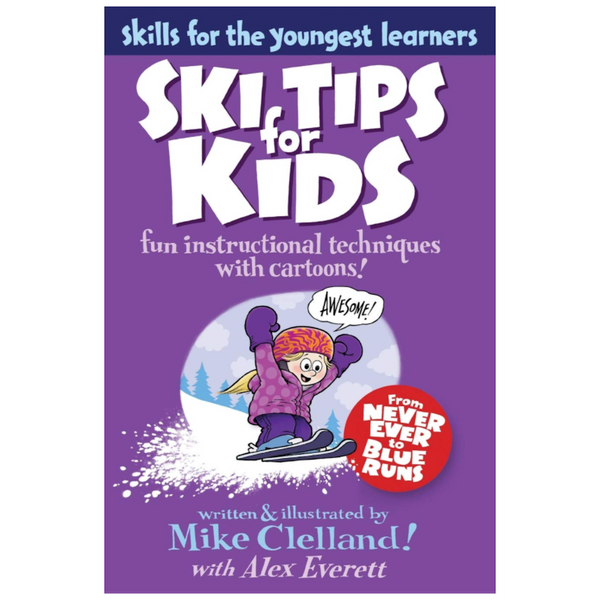
Illustrations by Mike Clelland, from Ski Tips for Kids.
More Ski Tips for Kids
Parts of a Ski · Boot Sizing & Mondo Guide · How to Dress Kids for Skiing · Do Kids Need Ski Poles? (coming soon) · Best Tools for Teaching Kids to Ski (coming soon) · Boots with Buckles