

Riding a chairlift with kids goes more smoothly when you practise before joining the line, explain the sequence, and ask the lift attendant for help early. Choose a lift that serves terrain your child can ski, then break the ride into three jobs: loading, sitting securely and unloading.
The chair keeps coming whether or not the family meeting has reached a conclusion. Have the meeting earlier.
Watch the lift together before using it. Show your child where people wait, where they move forward and how they sit down. Follow the ski area’s signs, rules and staff instructions; the arrangement at the last resort you visited may be different.
First, check the way down
Before graduating from the beginner area, check the run served by the chairlift. Your child needs the speed control and turning skills for that terrain, along with enough energy left to use them. A chairlift ticket is an uphill arrangement. The downhill part remains your problem.
Ask an instructor which lift and run suit their current ability. A familiar, gentle route gives them one new task to learn instead of a new lift followed by an unexpectedly demanding descent.
They also need to listen and respond to the short instructions involved in getting on and off, with appropriate adult help. If either of you is uncertain, make learning to use the lift part of a lesson. There is no deadline for leaving the magic carpet.
Practise on a bench

“You can practice getting on the chairlift using a bench.” — Mike Clelland, Ski Tips for Kids
A bench lets you rehearse looking over your shoulder for the approaching chair, sitting down and sitting back. Show the movement, then let your child try it. Explain where you will sit and how you will help.
You can practise the getting-off sequence too: wait for your cue, stand up together and move forward. A stationary bench lacks the mountain view, but it is admirably patient with repeat performances.
This makes the movements familiar; it doesn’t replace instructions for the actual lift. Watch a few groups load, then talk to the attendant about your child’s size, experience and the help you need.
Talk to the liftie before loading

Tell the attendant it is your child’s first ride, or their first time on this lift. Ask where each person should stand and what assistance is available. Request help or slowing early, rather than assuming someone will spot the difficulty as your chair arrives.
The book’s illustrations show why position matters: an attendant can’t help a child they can’t reach. Let the staff choose the appropriate loading arrangement for their lift.
Get equipment sorted before the loading point. Secure loose clothing, straps and lines. Take pole straps off your wrists, and remove a backpack before riding. Keep your phone put away so you can hear instructions and help your child. The photograph can wait until the photographer is no longer responsible for boarding.
In the line: one plan, straight skis

“Get all organized in the line.” — Mike Clelland, Ski Tips for Kids
Explain who is helping your child and where they will sit. Follow the lift’s waiting and loading marks, moving forward when directed. Keep skis pointing forward and leave room for the people beside you.
Give one short instruction at a time. “Move to the line” is useful. A running commentary on everything that could happen is less so.
If your child isn’t ready, or equipment becomes tangled, tell the attendant. Missing a chair is fine. Don’t rush into loading with the plan still in pieces.
Sit back, then lower the bar
Watch the approaching chair and sit when directed, giving your child the help agreed with the attendant. Each child needs their own seat, facing forward and sitting all the way back against the backrest. Don’t put them on your lap.
Once everyone is properly seated, tell the other riders and carefully lower the restraint bar if the chair has one, following that lift’s instructions. An adult should help a small child with the bar rather than asking them to reach for it.
Stay attentive to your child’s position throughout the ride. The bar is part of the routine; it isn’t a substitute for supervision.
On the ride: sitting is the activity
Keep the ride calm: no bouncing, rocking, twisting around or leaning over the edge. Leave boots, bindings and dropped equipment alone. If something falls, let it go and ask staff for help retrieving it later.
Point out the route you will ski and where you will stop together. This can make the next run feel familiar without adding another lecture. The child has a good view and a captive instructor; resist the temptation to cover the entire syllabus.
If the lift stops, stay seated and follow staff directions. Never try to jump off.
Make the unload plan before the top

Before reaching the station, explain what happens next: prepare the skis, wait for the unloading point, stand and glide straight clear of the ramp. Agree on a safe place to regroup beyond the unloading area.
Keep the bar down until the signs tell you to raise it. Let the other riders know before moving it, and help your child as needed. Keep ski tips up as you approach the ramp and stand at the designated unloading point.
Glide clear, then regroup

Glide forward without an immediate turn across the people beside you. Once clear, move to your agreed meeting place. The ramp is a poor location for a detailed review of what everyone should have done differently.
If someone falls, alert the attendant, keep clear of the moving chair and follow staff directions. Clear the unloading path as soon as you can; don’t stop there to collect scattered equipment or organise the next run.
Keep the first few rides familiar
Repeat the same simple cues, choose manageable terrain and finish while your child still has enough attention for the whole sequence. Getting on successfully is encouraging, but it doesn’t make a tired child ready for a bigger run.
A little preparation gives you more room to enjoy the ride together. That is a better use of the view than discovering, halfway up, that neither of you knows the way down.
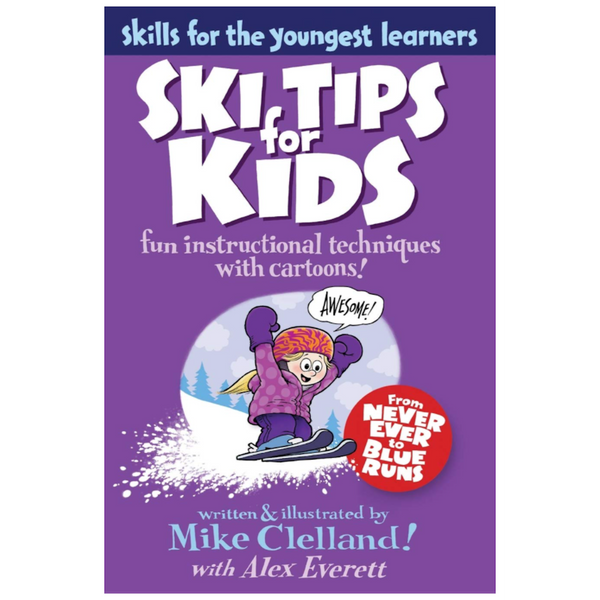
Illustrations by Mike Clelland, from Ski Tips for Kids.
More Ski Tips for Kids
Bench Chairlift Practice · Boots to the Line · Straight Skis, Smooth Ride · Back to Back · Preview the Run from Above · Top-of-Lift Game Plan
For current lift guidance, see Ski Safety Canada and NSAA’s lift-safety guide. Always follow the instructions at the lift you are using.


