
The best tool for teaching a child to ski is the one that addresses their current difficulty while leaving them actively involved in learning. For one child that might be a clear track to follow. For another it might be a ski-tip connector or carefully managed assistance from an adult.
The shopping list should follow the lesson. Otherwise you can acquire an impressive bag of equipment and still have no idea what to try on the next run. Start with terrain, a demonstration and a task the child can understand. Add equipment when you can explain what it is supposed to help them do.
Start with equipment that fits

Before adding teaching aids, check the basics. Appropriate skis and securely fitted, comfortable boots make movement easier to learn. Cold hands, painful feet or equipment that's too much for the child can look like a teaching problem.
Use the Kids’ Ski Gear Guide and Boot Sizing Guide. Have a qualified shop set up and check the bindings for the child and boots.
An excellent teaching device won't make an oversized boot transmit movement properly. It may simply help you travel farther before the child complains about it.
Cones and markers for practising turns

Cones and other markers give a child something concrete to turn around or ski toward. A few clear targets can make “turn here, then over there” easier to understand than a parent waving vaguely at an entire mountain.
Use an instructor’s established course in a suitable beginner area, with permission and enough space. Follow the intended route and spacing. Don’t set up your own surprise obstacle course across a public run; the other skiers have not signed up for your lesson.
Choose a simple route that suits the child’s ability and lets them look ahead to the next marker. The goal is a series of manageable turns, rather than collecting cones with their ski tips. Ask the instructor which task to practise before adding speed or tighter turns.
Short skis for the teaching parent

“Short skis make getting in close to the child simpler, especially when your edges are perpendicular to the fall line.” — Mike Clelland, Ski Tips for Kids, p. 5
Shorter skis can make manoeuvring close to a little skier easier for a capable adult. They may help with positioning, demonstrations and getting near after a fall.
They don't remove the need for adult ability or awareness. Use equipment appropriate to you and the task, and understand its bindings and handling characteristics. Short skis are an option for a capable teacher, rather than a prerequisite every parent should rush out and buy.
The Short Skis, Big Wins illustration is the original cue. Its handlebar moustache remains optional.
Edgie Wedgies: help hold the pizza wedge

A ski tip connector can help a young beginner keep the ski tips in the relationship needed for a wedge. It addresses the shape-control task while the child develops balance and edging.
It doesn't give the adult direct control of speed. Use the product correctly and give the child opportunities to develop independent control as appropriate.
Our Edgie Wedgie & Ski Tip Connectors guide covers setup, suitable use and progression beyond the assistance. Shop original Edgie Wedgies at Slope Ropes.
Slope Ropes: help with speed and direction

Slope Ropes let a capable adult ski behind a young beginner and assist with speed and direction. One handle sits at the child’s hips; the adult holds the other. There are no straps or buckles attaching the trainer to the child. The child carries their own weight, rather than being held up for the journey.
The adult can gently guide turns through movements of their handle, even one-handed. As the child begins making the movement, reduce the guidance and give them time to respond. The useful question is whether they are doing more of the skiing themselves. Getting down a run is one achievement; learning something on the way is the one we are after.
Read the How It Works guide and demonstrations, practise handling the trainer while stationary, and start on a quiet, gentle slope. The adult must be able to manage their own speed, turns and stops while supervising the child. If that is too much to juggle, an instructor and an easier task will help more than another piece of equipment.
A tip connector and Slope Ropes address different difficulties, so they are often used together: assistance with speed and direction plus the pizza wedge position. The Slope Ropes and original Edgie Wedgie combo pack puts both in one pack. Choose the combination when both jobs need help; more equipment is not automatically more teaching.
Shop Slope Ropes for the trainer itself, or choose the combo pack above when a tip connector is useful too.
SkiRing: a physical cue for hands forward

A child who keeps dropping their hands behind them may benefit from something simple to hold in front. SkiRing is a circular training aid intended to help learners practise hand position and an athletic stance. It gives the hands a job without introducing ski poles. Apparently “put your hands here” can be improved by giving “here” a physical address.
Mike’s book uses an imaginary steering wheel as a cue for hands forward. A physical ring serves as a tangible reminder, but it does a different job from Slope Ropes or an Edgie Wedgie: in this exercise it cues the child’s position, rather than linking ski tips or providing assistance from an adult behind.
Check the manufacturer’s instructions and ask the child’s instructor how to use it for the skill they are practising. The child still needs to balance and turn through their feet and legs; holding a ring is a cue, not a substitute for those movements. Shop SkiRing from its manufacturer.
What about a ski harness?
A body-attached harness is another way of connecting an adult and child. Its fit, attachment position and use depend on the particular design. Whatever tool you use, watch whether the child supports their own weight and practises balancing and turning, rather than relying on a constant pull. Ask an instructor to assess the setup if they keep leaning back.
Close-range aids and soft props
Instructors may use a hoop or poles for close-range assistance. These require technique and suitable terrain; ask for a demonstration rather than copying a passing lesson without its explanation.
Small soft props can give the hands or eyes a job during a game. An imaginary object often works equally well and can't fall out of a mitten.
Use props only while they support the skiing. If the child sacrifices control to protect a toy, the tool has become the task.
Instruction is a resource too
A lesson can help select terrain, demonstrate technique and identify what the child is ready to learn next. Parents can then reinforce those skills during enjoyable practice together.
You don't need to choose between being an involved parent and getting useful instruction. Ask what to practise, which cues worked and what signs would show readiness for the next step.
Buy or borrow equipment for a clear reason. Keep watching whether the child can do more themselves. The most satisfying thing a teaching tool can help produce is a skill that eventually needs less help.
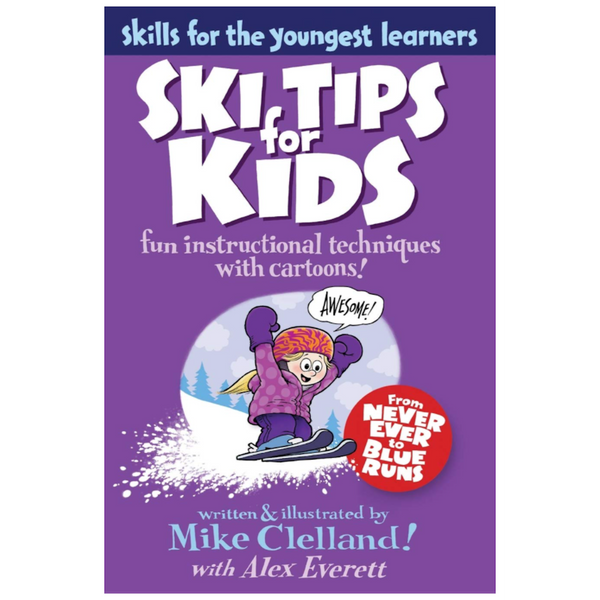
Illustrations by Mike Clelland, from Ski Tips for Kids.
More Ski Tips for Kids
Kids’ Ski Gear Guide · Boot Sizing & Mondo Guide · Edgie Wedgie & Ski Tip Connectors · Short Skis, Big Wins · Slope Ropes: How It Works


